SEO vs. PPC: Which One Is Better For Your Business In 2026?
If you’re investing in digital marketing, you’ve probably asked this question:
Should I focus on SEO or PPC?
It sounds like a simple choice. But in reality, it’s one of the most misunderstood decisions businesses make.
Some companies invest months in SEO expecting quick results. Others pour money into ads without building long-term assets.
And both end up frustrated.
The truth is not about choosing one over the other.
It’s about understanding when, why, and how to use each strategically.
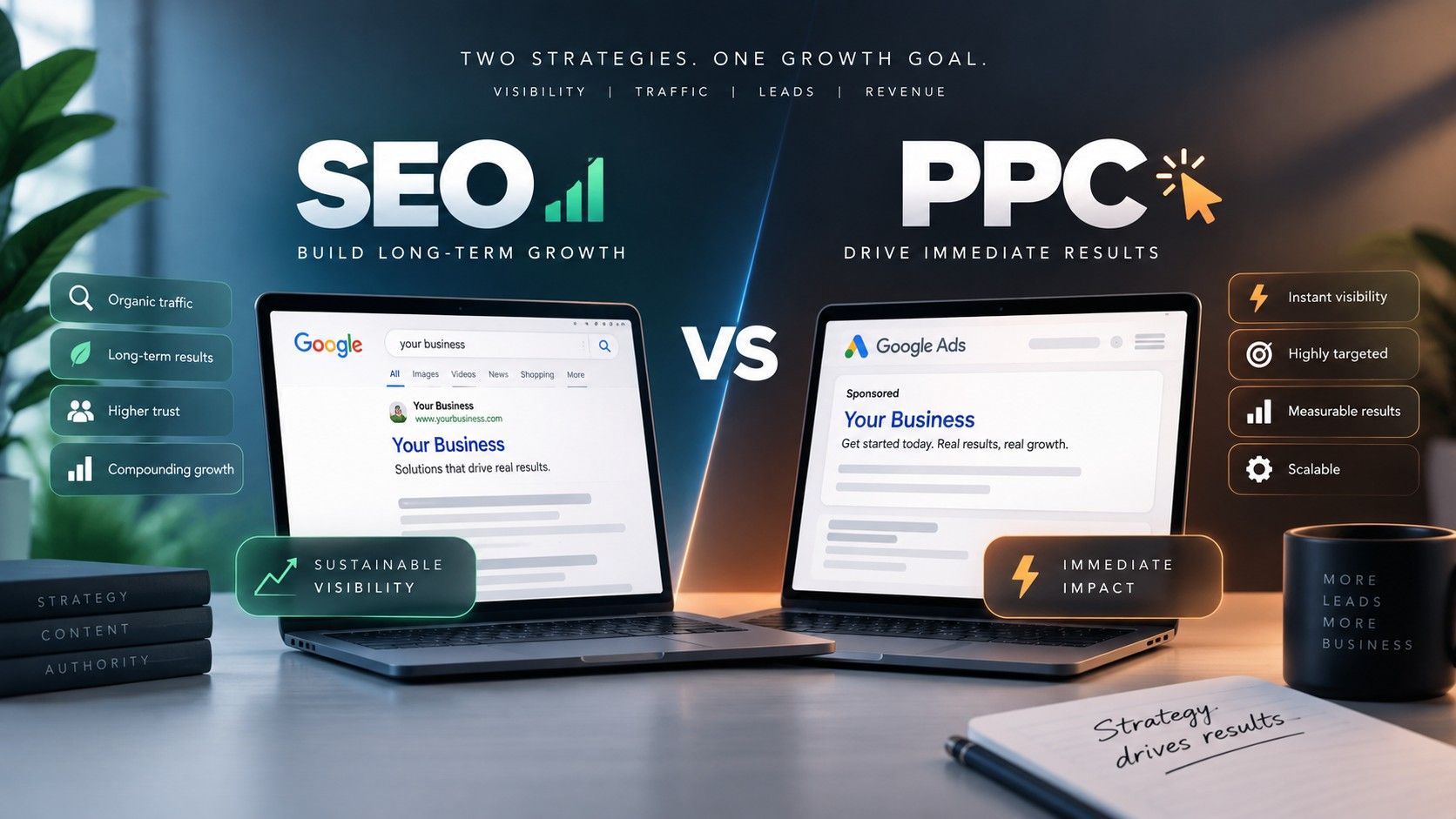
In short: SEO is generally better for building long-term organic visibility, while PPC is better for generating immediate traffic, testing offers and reaching targeted audiences quickly. For many businesses, the strongest approach is not choosing one over the other, but using PPC for speed and data while SEO builds long-term visibility.
What Is SEO And What Is PPC?
Before comparing them, let’s clarify what each one actually does.
What Is SEO?
Search Engine Optimization (SEO) is the process of improving your website so it ranks organically on search engines like Google.
You don’t pay per click, but you invest in:
- content
- technical optimization
- authority (links, trust signals)
The goal is to generate consistent, long-term traffic.
What Is PPC?
Pay-Per-Click (PPC) advertising allows you to pay for visibility on platforms like Google Ads, Meta Ads, LinkedIn Ads, or TikTok Ads.
In traditional PPC campaigns, advertisers pay when someone clicks an ad, although paid media can also use other pricing models depending on the platform and campaign type.
The goal is to generate immediate traffic and conversions.
SEO Vs PPC: The Core Differences
Understanding this is where most decisions go wrong.
Speed
- SEO typically takes longer to produce meaningful results, depending on competition, website authority, content quality and technical SEO.
- PPC can generate leads almost immediately
👉 If you need results now, SEO alone won’t solve it.
Cost Structure
- SEO: upfront investment, lower marginal cost over time
- PPC: continuous investment, scalable but dependent on budget
👉 PPC is not “expensive” if it’s profitable.
👉 SEO is not “free” if it takes months without results.
Control
- SEO: limited control over rankings
- PPC: greater control over targeting, budget and messaging.
👉 PPC gives you predictability. SEO does not.
Scalability
- SEO scales slowly
- PPC scales fast (if your funnel works)
👉 But scaling PPC without a solid funnel increases wasted spend.
Intent
- SEO primarily captures existing search demand while also building visibility and authority across the customer journey.
- PPC can capture and create demand
👉 This is one of the biggest strategic differences.
When Should You Choose SEO?
SEO works best when:
- You have time to build long-term growth
- You want to reduce dependency on paid channels
- Your industry has strong search demand
- You can consistently create high-quality content
But here’s the reality many don’t talk about:
👉 SEO today is slower and more competitive than ever
👉 AI is changing how users search and consume content
That doesn’t make SEO irrelevant.
It just makes it less predictable as a standalone strategy.
When Should You Choose PPC?
PPC is the right choice when:
- You need leads or sales quickly
- You want to validate an offer
- You are entering a new market
- You want measurable and controllable results
PPC is especially powerful for:
- lead generation
- high-ticket services
- ecommerce scaling
But there’s a common mistake:
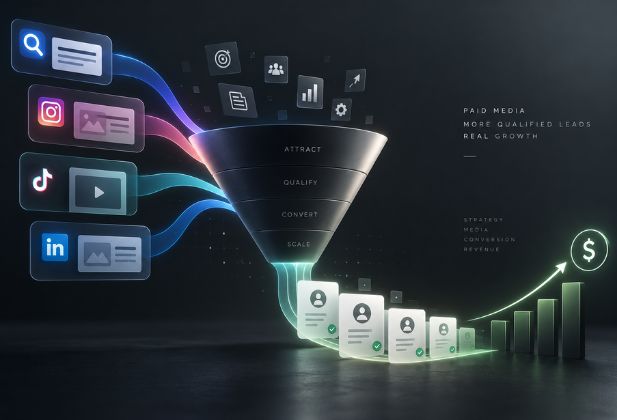
👉 Running ads without a clear strategy or funnel. A structured paid media strategy can help businesses capture demand, test offers and scale what works.
That’s when PPC becomes expensive instead of profitable.
Is SEO or PPC More Expensive?
Neither SEO nor PPC is inherently cheaper. SEO requires ongoing investment in content, technical optimization and authority building, while PPC requires continuous media spend. The better comparison is cost per business outcome: qualified lead, customer acquisition cost and revenue generated—not simply the cost of traffic.
The Biggest Mistake: Thinking It’s SEO Or PPC
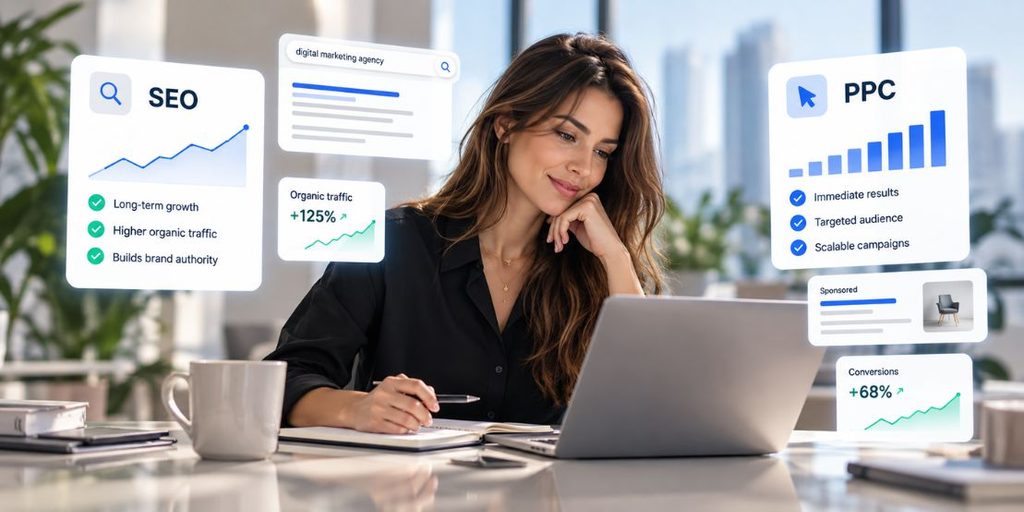
Many businesses can benefit from using SEO and PPC together rather than treating them as mutually exclusive strategies.
High-performing companies don’t choose one. They build a system where both work together.
How SEO And PPC Work Better Together
Here’s how the combination actually looks in practice:
- PPC generates immediate data (what keywords convert, what messaging works)
- SEO uses that data to build long-term organic growth
- SEO content feeds retargeting campaigns
- PPC accelerates traffic to high-performing pages
👉 PPC gives speed and data
👉 SEO builds sustainability
Together, they create compounding growth.
A Common SEO and PPC Scenario
A very common scenario:
A business invests heavily in SEO for months, but:
- traffic grows slowly
- leads are inconsistent
After introducing PPC:
- they identify high-converting keywords
- test different offers quickly
- validate what actually drives revenue
Then:
- SEO content is optimized around proven data
- paid campaigns scale what works
👉 Result: faster growth with lower risk
This is how you reduce guesswork in SEO.
How To Decide What’s Right For Your Business
Instead of asking “SEO or PPC?”, ask:
- How fast do I need results?
- Do I have a validated offer?
- What is my budget flexibility?
- Do I need immediate leads or long-term positioning?
Simple guideline:
- Short-term results → PPC
- Long-term growth → SEO
- Sustainable growth → Both
Where Most Companies Lose Money
From experience, the biggest losses happen when:
- SEO is done without a clear keyword strategy
- PPC is optimized for clicks instead of conversions
- There is no alignment between marketing and sales
- No data is used to improve decisions
👉 The problem is not the channel
👉 It’s the lack of strategy
How BRAINT Approaches SEO And PPC
At BRAINT, we don’t treat SEO and PPC as separate efforts.
We build integrated growth systems where:
- Paid media drives immediate results and insights
- Data from campaigns informs organic strategy
- Continuous testing improves performance over time
Our focus is simple:
👉 Maximize the return of every marketing dollar
👉 Reduce wasted spend
👉 Scale what actually works
If you’re unsure whether to invest in SEO, PPC, or both, the worst decision is guessing.
Without reliable data, businesses can spend months testing strategies without knowing which channels are actually contributing to growth.
We help you identify what will work faster and more profitably based on your business.
Not sure where your biggest growth opportunities are? Our Performance Audit identifies gaps in your paid media strategy, tracking and conversion journey to uncover where performance can improve.