Lead Acquisition Through Paid Media:
How to Generate Qualified Leads That Convert
Most companies don’t have a traffic problem. They have a lead quality problem.
You can run ads on Google Ads, Meta Ads, TikTok Ads or LinkedIn Ads, generate hundreds of leads… and still feel like nothing is working. Sales teams complain, conversion rates drop, and cost per acquisition keeps increasing.
The issue is rarely the platform. It’s the strategy behind how leads are acquired, qualified, and optimized.
This guide breaks down how to actually generate high-quality leads through paid media, based on real campaign experience, not theory.
What is lead acquisition through paid media?
Lead acquisition through paid media is the process of using platforms like Google Ads, Meta Ads, TikTok Ads, or LinkedIn Ads to attract potential customers and convert them into contacts (leads) through forms, landing pages, or direct messaging.
But here’s where most definitions fall short:
- Not all leads are valuable.
- Not all conversions are profitable.
A successful strategy is not about volume. It’s about predictable, scalable, and qualified demand.
Why do most lead generation campaigns fail?
After managing campaigns across multiple industries, these are the most common issues:
1. Optimizing for the wrong metric
Many campaigns optimize for cheapest cost per lead or highest volume, instead of cost per qualified lead and cost per sale.
Result: You get cheap leads that never convert.
2. Weak qualification process
If your form only asks for basic information like name, email, or phone, you may be attracting low-intent users.
High-performing campaigns usually include qualifying questions, budget indicators and intent filters.
3. Poor alignment between ad and landing page
A very common mistake: Ad promises one thing and the landing page says something else. This breaks trust and kills conversion rates.
4. Over-reliance on the platform
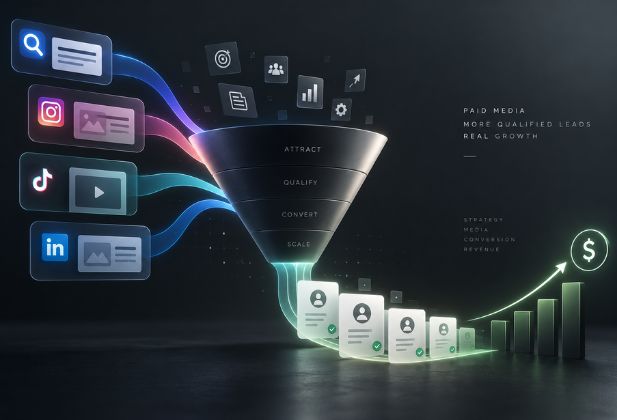
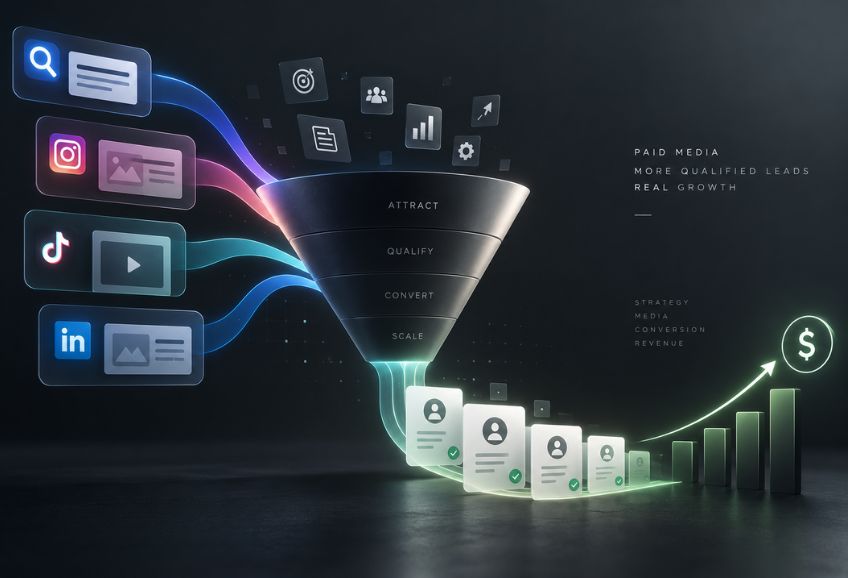
Many businesses depend entirely on Meta Ads for volume and Google Ads for intent. But relying on just one or two platforms rarely creates a complete full-funnel acquisition system.
The framework: How to build a high-performing lead acquisition system
This is where most agencies stay superficial. This is the actual structure that works for us.
1. Define lead quality before launching campaigns
Before running ads, you need to answer:
- What is a qualified lead?
- What budget should they have?
- What problem are they trying to solve?
- How fast do they convert?
Without this, the algorithm optimizes blindly.
2. Choose the right channels based on intent
Not all platforms serve the same purpose:
- Google Ads: Best for high intent searches
Users are actively looking for a solution - Meta Ads: Best for demand generation
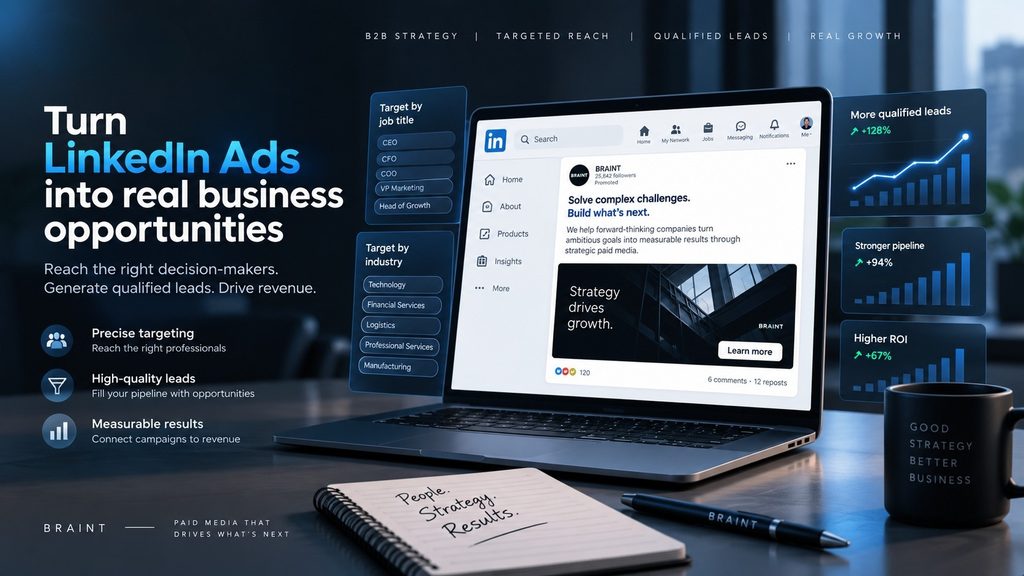
You create interest and capture leads - LinkedIn Ads: Best for B2B and high-ticket offers
More expensive, but higher quality - TikTok Ads: Best for volume and creative testing
Strong for early-stage discovery
The key is not choosing one.
It’s connecting them strategically.
3. Build a conversion-focused landing experience
A high-performing landing page should:
- Match the ad message perfectly
- Remove distractions
- Focus on one action
- Include trust elements (proof, testimonials, results)
Small improvements to the landing page can significantly reduce cost per lead and improve conversion rates.
4. Implement real qualification
Instead of asking basic info, include:
- “What is your monthly budget?”
- “When are you planning to start?”
- “What is your main goal?”
This can improve lead quality and provide advertising platforms with stronger signals for optimization.
5. Optimize for conversion, not clicks
At early stages, traffic matters.
But scaling requires: conversion tracking, event prioritization, CRM feedback (if possible)
If your campaigns don’t know what a good lead is, they can’t improve.
Real campaign insight from BRAINT
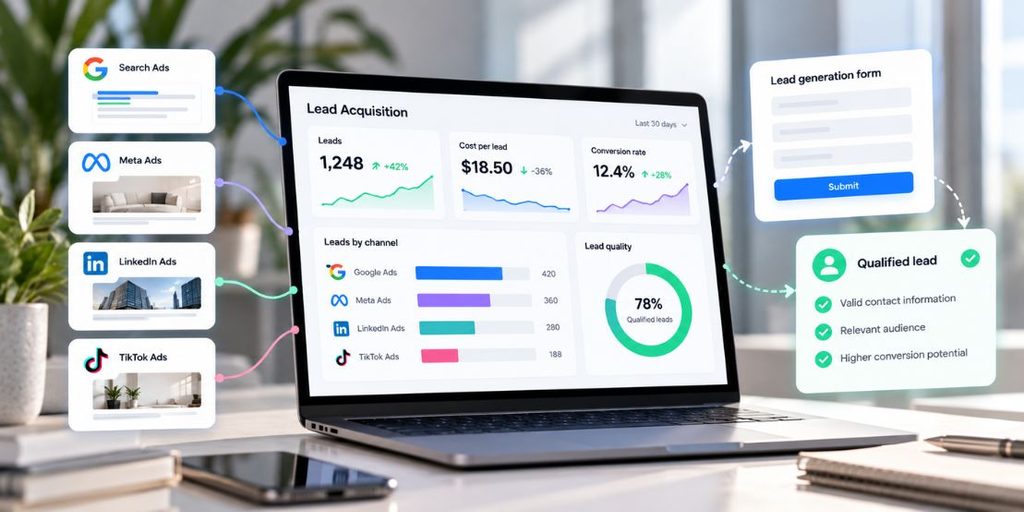
One of the most common situations we see is a client generating a high volume of leads while the sales team struggles with lead quality.
After making three key adjustments: Adding 2 qualification questions, changing the campaign objective and aligning the landing page message, lead volume dropped by ~30% and cost per lead increased slightly, but qualified leads increased significantly, sales conversion improved and cost per acquisition went down
This is the difference between optimizing for platform metrics vs business results.
How to reduce cost per lead without killing quality
Most companies try to reduce CPL the wrong way.
Here’s what actually works:
- Improve targeting, not just budgets
- Test creatives constantly (especially on Meta & TikTok)
- Optimize landing page experience
- Filter low-quality users early
- Use retargeting strategically
Lower cost doesn’t come from spending less. It comes from wasting less.
When should you scale your lead generation campaigns?
When should you scale your lead generation campaigns?
You should scale when:
- You have stable cost per qualified lead
- Your sales team can handle volume
- Conversion rates are consistent
- You understand which channels drive real results
How BRAINT approaches lead acquisition
At BRAINT, we don’t see lead generation as running ads.
We approach it as a full system:
- Deep diagnosis of your business and audience
- Multi-channel strategy (Google, Meta, TikTok, LinkedIn)
- Conversion-focused landing structures
- Continuous testing (creatives, audiences, messaging)
- Data analysis connected to real business outcomes
The goal is simple: Generate leads that actually turn into revenue.
If you’re generating leads but struggling with low quality, high costs or poor conversion, it’s not just a campaign issue. It’s a system issue.
We can help you identify where you’re losing money and how to fix it.
Our performance audit can help you identify where you’re losing money and uncover opportunities to improve your paid media results.